
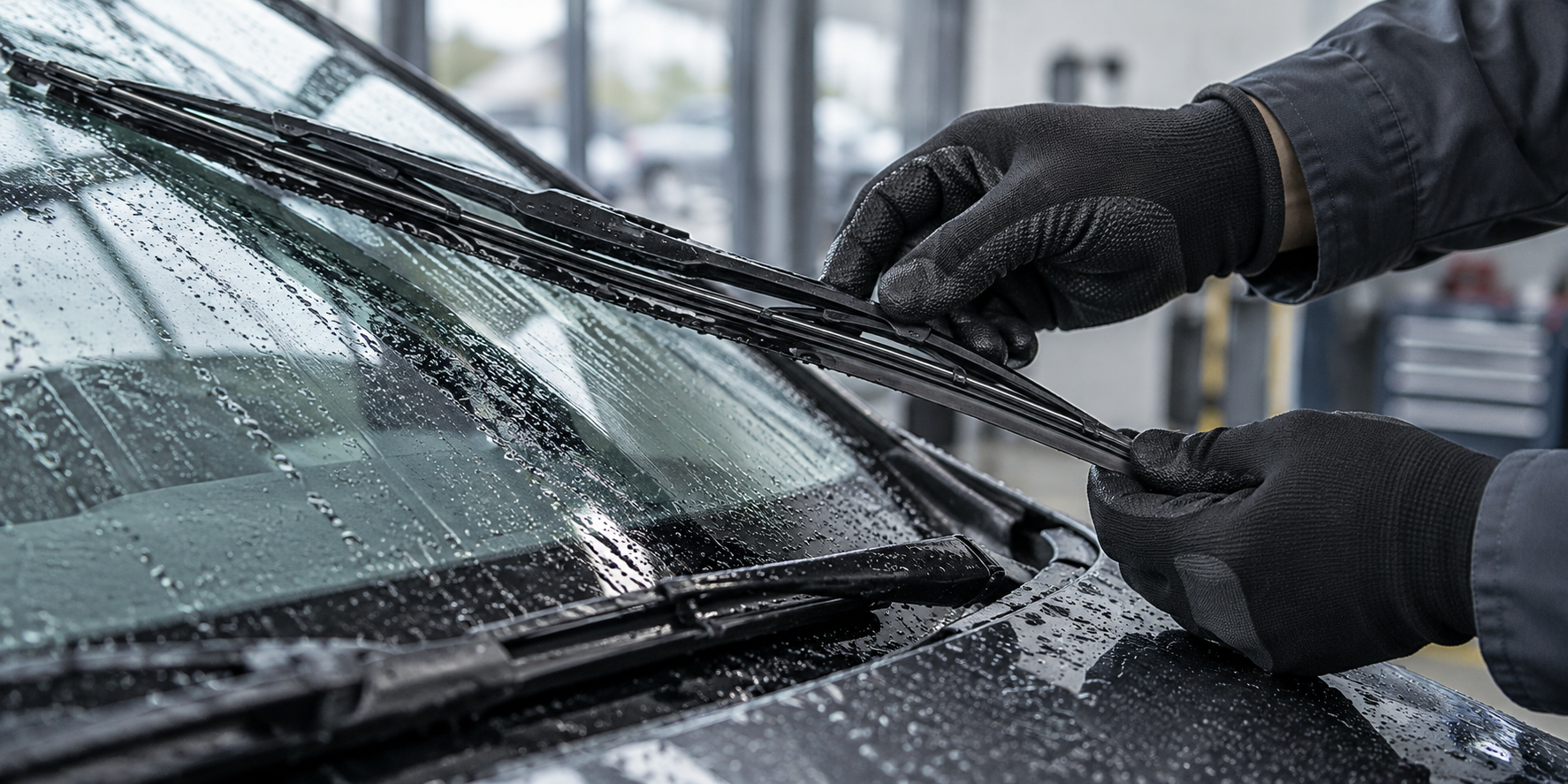
Windshield wiper blades rarely fail all at once. Their performance usually declines through small changes in the wiping pattern: a line that remains in the driver’s field of view, a patch of water that does not clear, or a blade that starts to chatter across the glass. Learning to read those signs is more useful than relying on age alone.
In this guide, we explain when to replace windshield wiper blades, how to test them correctly, and how to distinguish worn rubber from contamination or a fitment problem.
Why the wiping pattern matters
A clear windshield is part of the vehicle’s visibility system. In the United States, Federal Motor Vehicle Safety Standard No. 104 specifies requirements for windshield wiping and washing systems on passenger cars, multipurpose passenger vehicles, trucks, and buses. The regulation addresses system performance; it is not a consumer replacement schedule.
For practical inspection, the most important question is whether the blade leaves a consistently clear view in the area the driver uses most. The inspection graphic supplied for this article divides the wiped field into a central two-thirds and two outer one-sixth zones. That zoning is a useful diagnostic aid, but the exact permitted number of streaks should not be treated as a universal legal pass/fail rule. Vehicle design, local regulations, and manufacturer procedures can differ.
A brief mark that disappears may be contamination. A persistent streak, water patch, smear, or chatter after cleaning is a stronger sign that the blade can no longer maintain even contact with the glass.
Test the blades before replacing them
Do not diagnose a wiper on a dry or dirty windshield. Dirt, wax, road film, tree sap, ice, and washer-fluid residue can make a serviceable blade look defective. A manufacturer service bulletin archived by NHTSA recommends cleaning the windshield and blade, rinsing them, wetting the glass, and then grading the wiping pattern. It also warns against operating the wipers on dry glass.
- Clean the outside of the windshield with washer solution or a mild automotive glass cleaner.
- Wipe the rubber edge with a clean cloth dampened with washer solution.
- Rinse away loosened dirt and residue.
- Wet the windshield thoroughly with the washer system or clean water.
- Run several full cycles and inspect the same area after each pass.
If the problem disappears, contamination was probably the main cause. If the same defect returns in the same location, inspect the blade rubber, connector, arm pressure, and windshield surface.
7 signs your windshield wiper blades need replacement
1. A persistent streak in the driver’s main field of view
A line near the edge may be less obstructive than a central streak, but it should still be monitored and corrected. A streak that repeatedly crosses the central viewing area deserves prompt attention. Clean the glass and rubber first. If the line returns in the same place, the wiping edge may be nicked, hardened, or permanently deformed.
2. Multiple streaks across the wiped area
Several permanent streaks usually indicate that the rubber edge is no longer making uniform contact. The supplied inspection graphic treats limited outer streaking differently from defects in the central zone, but once multiple lines spread across the complete wiped area, replacement is the practical response.
3. Water patches or missed areas
Islands of water that remain after each pass are more serious than a thin line because they block a larger portion of the view. Common causes include distorted rubber, insufficient arm pressure, an incorrect blade curvature, a loose adapter, or a blade that is the wrong length for the vehicle.
4. Smearing or a cloudy film
A broad smear can come from oil, wax, silicone residue, road film, or contaminated rubber. Clean both surfaces and retest. If the smear persists, the rubber may have lost the sharp, flexible edge needed to move water cleanly rather than spreading it over the glass.
5. Chatter, skipping, or irregular movement
Chatter marks appear when the blade repeatedly grips and releases instead of gliding smoothly. AAA identifies chattering as a common clue that rubber is breaking down. It can also result from dry glass, contamination, poor installation, incorrect blade orientation, or uneven arm pressure. If cleaning and correct installation do not solve it, replace the blade.
6. Cracked, split, hard, or uneven rubber
Lift the arm only as far as the vehicle manufacturer permits and inspect both sides of the rubber. Look for cracks, tears, rounded edges, missing sections, stiffness, or a blade that no longer sits straight. NHTSA advises inspecting blades for wear and replacing them when they are not in good condition, particularly after severe winter weather or prolonged summer heat.
7. The blades are old or have endured severe conditions
There is no single replacement interval for every climate and vehicle. AAA notes that rubber inserts commonly last about six to twelve months, depending on exposure to heat, dirt, sunlight, acid rain, and ozone. Treat that range as an inspection reminder, not a guarantee. A blade should be replaced sooner when its wiping pattern deteriorates.
Quick wiper-pattern diagnosis
Read the wiping pattern
Clean the blade and fully wet the windshield before comparing the result. Use these patterns as diagnostic guidance, not as a universal legal pass/fail standard.
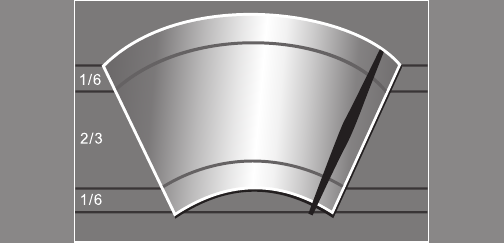
Clean sweep
No persistent lines or unwiped patches. Continue regular inspection.
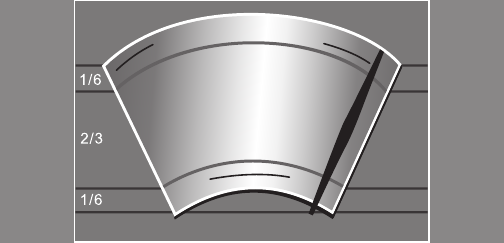
Temporary light line
Often moisture or surface contamination. Clean and test again.
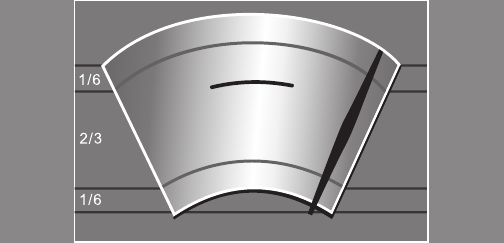
Persistent center streak
May indicate a damaged or hardened wiping edge.
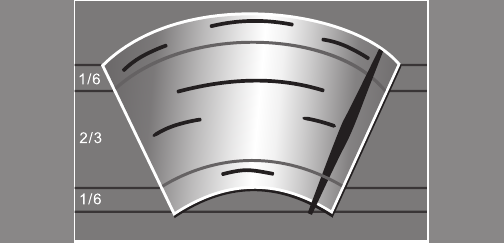
Multiple streaks
Check contact, fitment, and rubber condition.
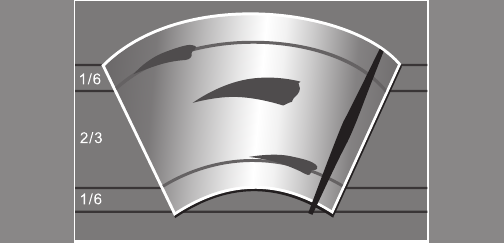
Water patches
Check arm pressure, curvature, adapter, and blade length.
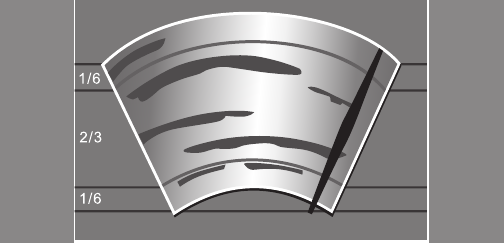
Smearing or haze
Clean the glass and rubber; replace if the defect persists.
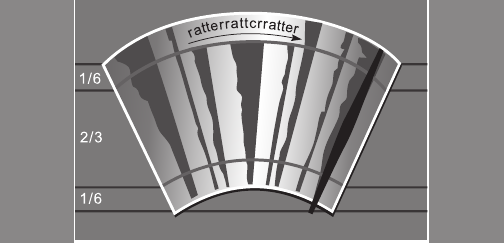
Chatter or skipping
Wet, clean, verify installation, then replace if unresolved.
| Observed pattern | Likely issue | Recommended action |
|---|---|---|
| Clean sweep with no persistent lines | Blade is functioning normally | Continue regular inspection |
| Light temporary line that disappears | Minor moisture or surface contamination | Clean and retest |
| Persistent center streak | Damaged or hardened wiping edge | Replace if cleaning does not correct it |
| Multiple permanent streaks | Uneven contact or worn rubber | Inspect fitment and replace |
| Water patches or missed areas | Poor contact, wrong curvature, or loose adapter | Check installation; replace if persistent |
| Broad smearing or haze | Contamination or degraded rubber | Clean glass and blade; replace if unresolved |
| Chatter or skipping | Dry glass, contamination, fitment, or rubber wear | Wet, clean, verify fitment, then replace if needed |
When the blade may not be the only problem
Replacing the rubber will not correct every wiping defect. If a new blade leaves the same unwiped patch, inspect the wiper arm and windshield. Weak or uneven arm pressure, a bent arm, excessive play, a damaged connector, incorrect blade length, or glass contamination can all reduce performance. Persistent system faults should be evaluated by a qualified technician.
Correct fitment matters as much as rubber condition. The replacement blade must match the vehicle’s required length, connector, curvature, and steering position. Distributors and private-label programs should validate these details across the intended vehicle application rather than relying on blade length alone.
Choosing the right replacement blade
- Match the vehicle application: confirm model year, make, model, and front or rear position.
- Confirm the connector: adapters must lock securely to the wiper arm.
- Use the correct length: a blade that is too long can interfere with another blade or the body; one that is too short reduces coverage.
- Consider climate: heat, UV exposure, snow, ice, dust, and frequent rain affect material and design requirements.
- Check both directions: the blade should remain stable and clear the glass on the upstroke and downstroke.
VENRAIN offers seven windshield wiper blade families for different vehicle applications and aftermarket requirements, including flat, hybrid, frame, snow, vehicle-exclusive, and rear wiper designs.
Simple maintenance that extends useful life
- Inspect the wiping pattern at least monthly and before long trips.
- Keep the washer reservoir filled with fluid suitable for the season.
- Remove insects, sap, wax, and road film from the glass promptly.
- Do not use the wipers to scrape heavy ice from the windshield.
- Do not operate the blades repeatedly on dry glass.
- Check the rear wiper as well as the front pair.
Frequently asked questions
How often should windshield wiper blades be replaced?
Six to twelve months is a common inspection guideline, but condition and wiping performance are more important than the calendar. Replace sooner if the blades streak, chatter, smear, leave water patches, or show physical damage.
Can cleaning fix streaking wiper blades?
Yes, when dirt, wax, road film, or washer-fluid residue is the cause. Clean the windshield and rubber edge, wet the glass, and test again. A defect that returns in the same place usually points to wear, damage, fitment, or arm-pressure issues.
Should both front wiper blades be replaced at the same time?
If both blades are the same age and have been exposed to the same conditions, replacing them as a pair helps maintain balanced performance. However, each blade should still be inspected individually, and the correct driver- and passenger-side lengths must be used.
Is one streak enough to replace a wiper blade?
Not always. A temporary line can come from contamination. Clean and retest first. A persistent streak in the driver’s primary field of view, especially when accompanied by other defects, is a stronger reason to replace the blade.
Clear visibility starts with a repeatable inspection
The best time to assess wiper blades is before heavy rain, not during it. Clean the system, test it on a fully wet windshield, and judge the pattern where clear vision matters most. Persistent center streaks, multiple lines, unwiped patches, broad smears, chatter, or damaged rubber are all practical signs that replacement should not be delayed.
For distributor, retail, or private-label wiper blade programs, contact VENRAIN to discuss vehicle coverage, adapters, packaging, testing, and sourcing requirements.